
With her "maybe" option, Danielle Smith could deliver an endless tax on Alberta's economy
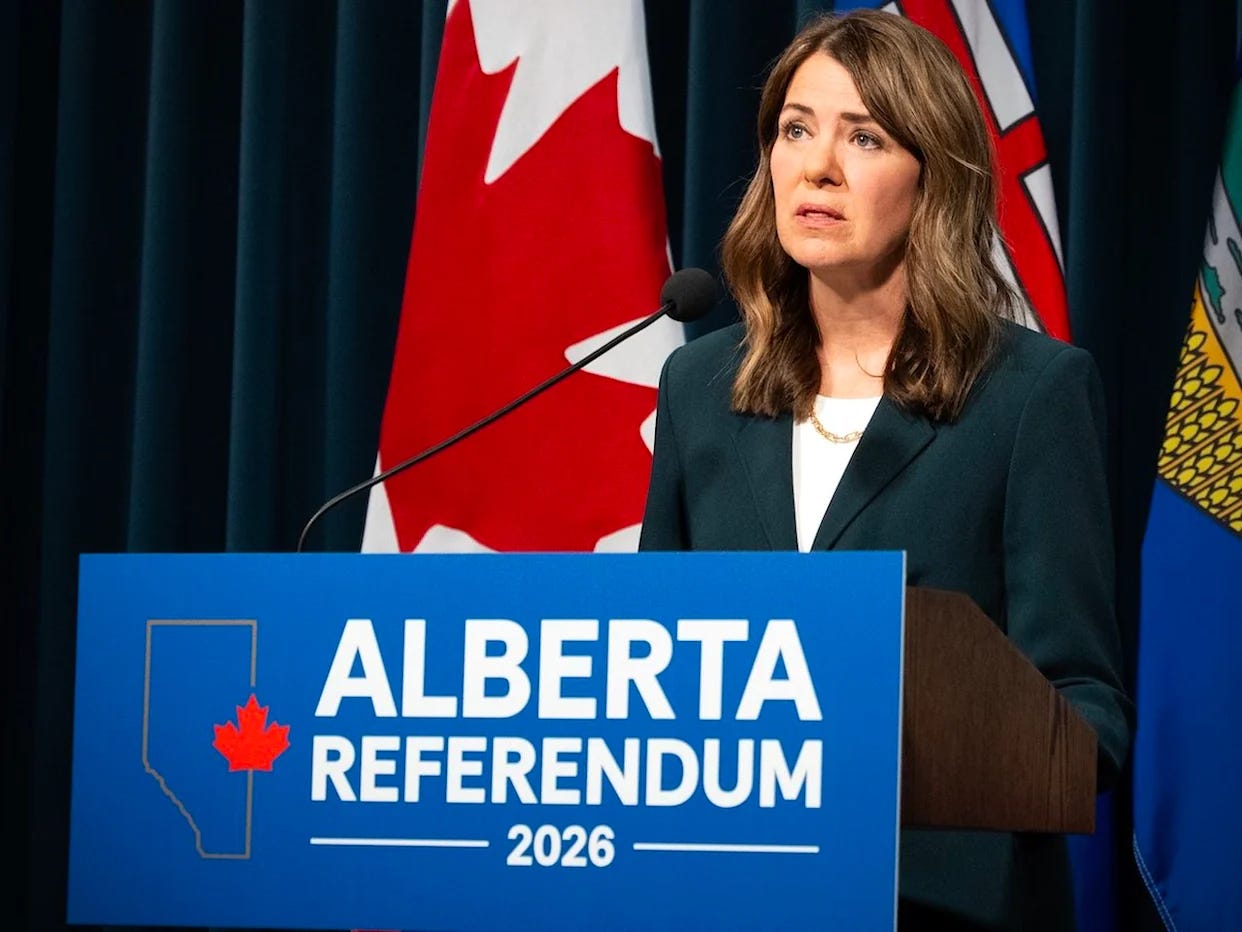
If 20% leave turns into 40% for Smith’s “maybe” option - Alberta will have avoided a near term crisis, but saddled itself with the image of a place that is unsettled and unpredictable.

Most of the time, referendums result in people deciding to maintain the status quo. In 26 national referendums across 26 countries, questions about maintaining an existing policy won 80% of the time. Questions asking people to endorse change are much less likely to succeed. Why does this happen?
People are generally more averse to losing something of value than they are convinced that they will gain something meaningful.
Change is complex, and the more people contemplate it, the easier it is to become worried and fatigued by the choice. Fatigue results in a no vote to change.
Those pitching change find themselves defending their project against multiple criticisms, from a variety of opponents. Opponents often only need to prove one downside of change. Proponents have to neutralize a lot of different concerns.
These dynamics are normal patterns but of course they can be upended by unusual events and circumstances. Still, as people consider the path to Alberta’s vote, they provide some parameters for thinking about what might happen.
In my research, hard core, convinced separatists in Alberta number roughly 20%. They are mostly male, often rural, generally older. They aren’t looking for a better deal, or the end of certain federal policies. They believe Canada has been a bad deal. They are angry about the influence of multiculturalism and progressive thinking in Canada. They are full throated about their conservatism, and many admire Donald Trump. Realistically, no one is going to change their mind, or their vote.
Committed federalists number 60%. Some of them think Alberta has been treated badly, some of them want a better deal, but they are pretty sure that separation will only make their economy weaker and their prospects more in doubt.
The remaining 20% are the voters whose choice will determine whether uncertainty becomes a more permanent feature of Alberta politics, with all the economic consequences that entails.
Some are only lightly interested in politics, and will be late deciders, if they end up voting at all. Others are mostly young, urban and suburban people who don’t feel particular grievance with Canada, but have a weaker attachment to the country and feel genuinely uncertain about whether the status quo will give them the economic future they aspire to, or whether separation might be more promising.
Of the choices Premier Danielle Smith has made in this debacle, giving people a “stay or maybe leave” choice is probably the worst. Letting the uncertain mark their ballot “uncertain” (meaning “let’s have another referendum”) might feel like a cost-less choice, but it isn’t.
If there needed to be a referendum - there didn’t - the way to end the conversation was a “stay or leave” choice.
The campaign then would have pitted political grievance against economic risk. In such a fight, concerns about the economy would almost certainly have prevailed.
Brexit broke this pattern, because the exit side campaigned aggressively that staying in the EU presented even greater economic downsides than leaving, which of course turned out to be dead wrong. However, a Carney federal government is not a parallel for Brussels, as far as Albertans are concerned. His approach is widely seen as economically reassuring, unifying and ambitious.
This debate needs to be led mainly by Albertans. As much as Carney has found traction in Alberta, swing voters know that his agenda includes the interests of people outside Alberta too.
Stephen Harper, Pierre Poilievre and many small, medium and large business voices should be crystal clear against Smith’s “maybe” option, and call it what it would be - an endless tax on Alberta’s economy.
Doing that means resisting the temptation to constantly validate grievance, as several federal Conservatives were doing again this week. The suggestion that there was no separatist sentiment in Alberta before the Liberals took over in 2015 is a ludicrous fiction. Every time people nurture the grievance they nurture the “maybe” argument - by letting people imagine that another referendum will result in more leverage, rather than fewer jobs.
By offering voters her “maybe” option, Smith has dangled a sword above the Alberta economy. It would be better if those who know this is true, did not equivocate in making that case.
If, in the end, the 20% leave sentiment grows into 40% support for Smith’s “maybe” option - she will have only herself to blame. Alberta will have avoided a near term crisis, but rebranded itself as a place that is unsettled and unpredictable, at the precise moment when attracting investment is crucial, and promising, too.
Very enjoyable piece. Thank you.
I wonder if the 20% hardcore are also 51st staters? I don't get the impression they want to move out of the basement to be on their own, more like they want to trade in mommy's basement for daddy's. But not sure.
A referendum to have a referendum. Now that's novel - a "have your cake and eat it too" approach.
After Brexit I really came to think on referendums (referenda?) as a total and complete abdication of responsibility by those who (whom?) we elect to engage in the art of the possible. By throwing it back to the people, to make the most consequential of decisions, where those very same people are played, manipulated, lied to, etc. etc. by those very same elected people who would not do the jobs in the first place. Grrrrrr Figure out a way. That's what we elect these people to do.
I thought I'd seen it all with David Cameron's move with Brexit, but Danielle Smith has out-Cameroned Cameron. What a mess she is creating to save her job.
Gosh I dislike this timeline.
All true. And when you factor in turn-out math what many people feel is a comfortable win for the Canadian side is almost a sure loss. The evidence suggests that people that are generally happy and/or strongly attached to Canada are going to turn up in municipal level numbers (30%). Those that have been raised on the Kool-aide are going to drag themselves from their death beds to be there (100%). This is their moment.